Oharai-machi & Okage-yokocho
Mie
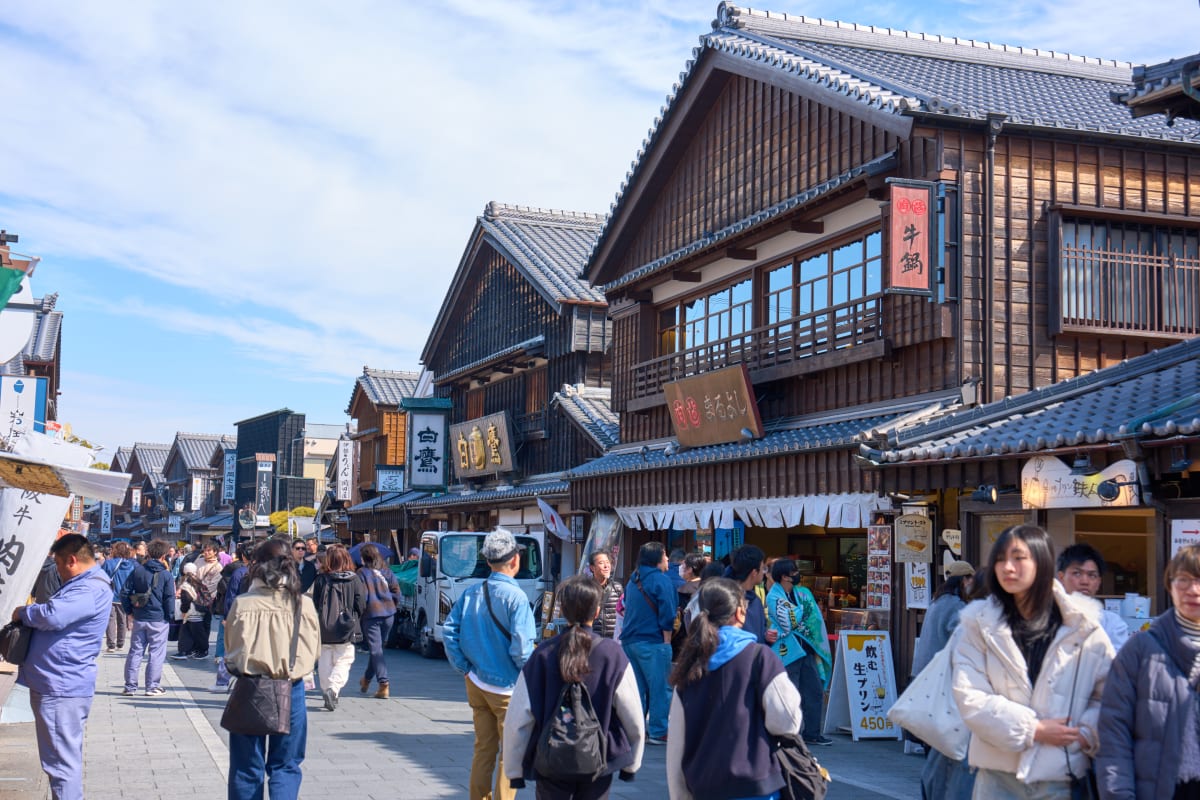
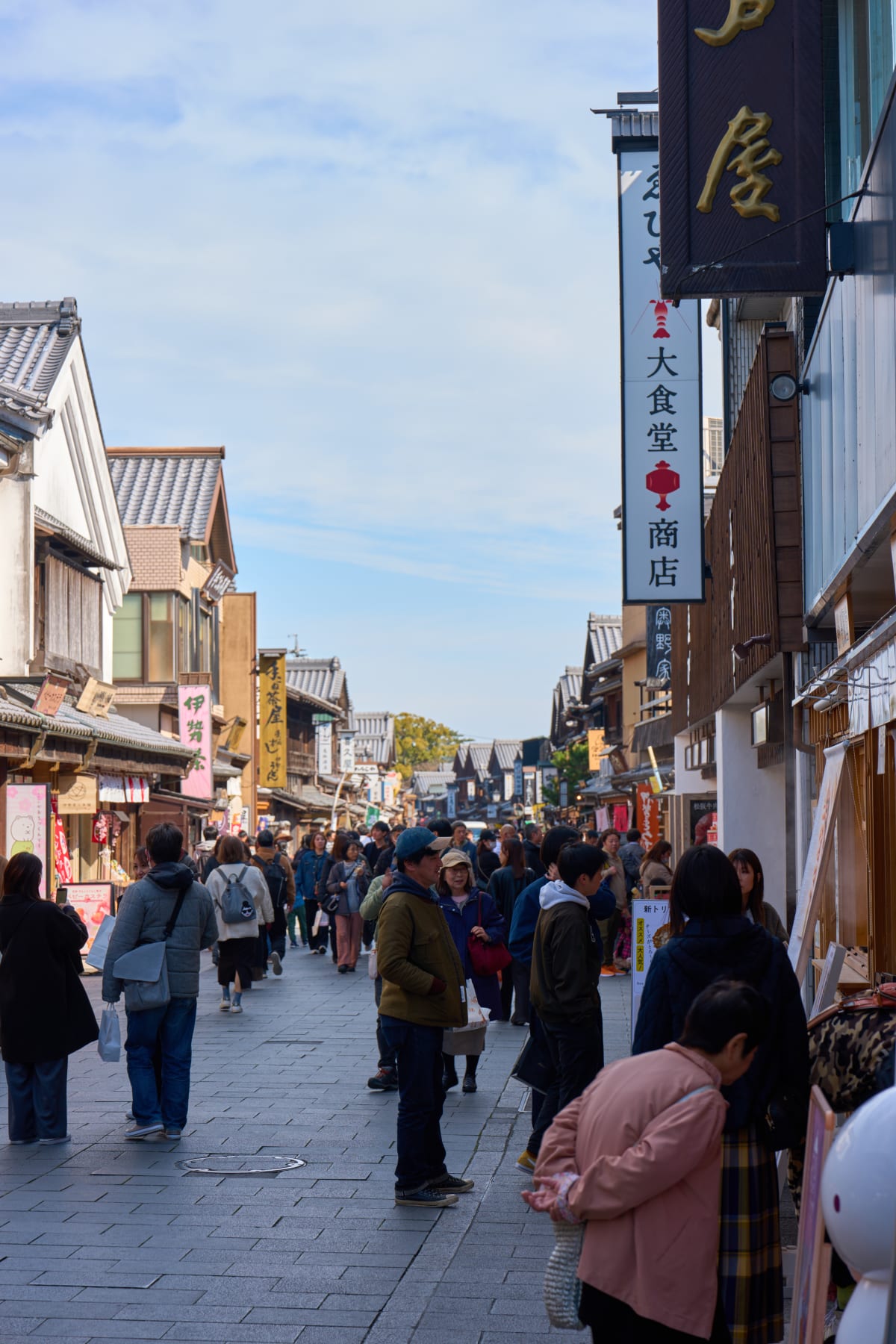
Oharaimachi and Okage Yokocho form an 800 m stone-paved approach to the Inner Shrine (Kotai Jingu) of Ise Jingu in Ise City, Mie Prefecture, recreating the late-Edo to early-Meiji townscape of the Ise pilgrimage route. At its heart, «Okage Yokocho» (2,700 tsubo, about 50 shops) was developed in 1993 by Akafuku as the 290th-anniversary project, embodying the post-pilgrimage «Okage-mairi» tradition. With Akafuku Honten, Ise udon, tekone-zushi, Matsusaka beef, the Jingu Sakaba, and Iseban-ko pottery all gathered in one place, this temple-front district welcomes about 4 million visitors a year and ranks among Japan's foremost approach-streets.
Highlights
- Okage Yokocho — recreates the Edo-to-Meiji townscape with about 50 shops, including Akafuku Honten, traditional Ise udon, and tekone-zushi
- Oharaimachi Street — the stone-paved approach to the Inner Shrine, lined with wooden buildings along the Isuzu River
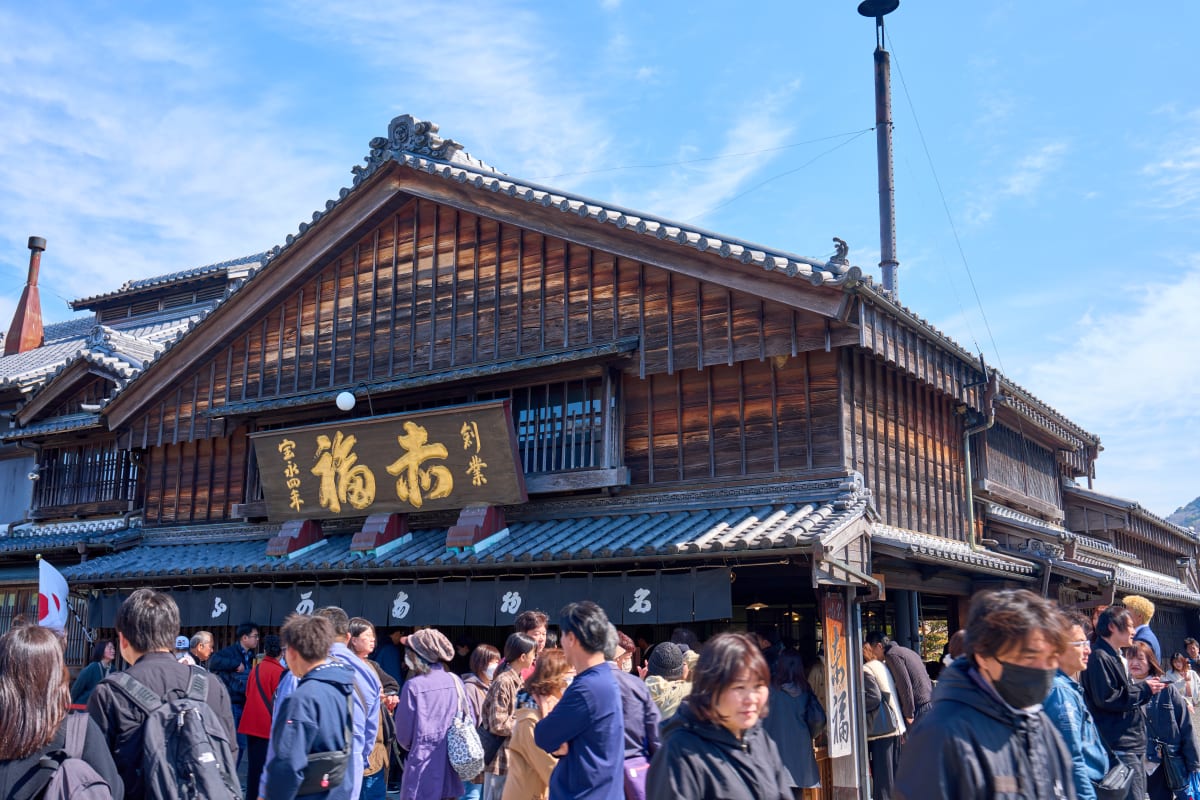
- Akafuku Honten — Ise's famous mochi shop founded in 1707; enjoy it inside while gazing at the Isuzu River
- Maneki-neko Shop and Iseban-ko Pottery — traditional craft shops where you can watch artisans at work
- Evening Illumination — lanterns and stone paving create a retro nightscape, especially atmospheric when wet stone reflects light after rain
Quick Answers
What are Oharaimachi and Okage Yokocho?
An 800 m stone-paved approach to the Inner Shrine of Ise Jingu in Ise City, Mie Prefecture, recreating the late-Edo to early-Meiji Ise pilgrimage townscape. Anchored by «Okage Yokocho» (50 shops, developed by Akafuku in 1993), it welcomes 4 million visitors a year and ranks among Japan's foremost temple-front districts.
Best time of day?
Early morning (7–9 AM) has fewer tourists and beautiful shadows on wooden buildings — the prime photo window. Evening illumination is atmospheric with lanterns and stone paving. Wet stone after rain also photographs well.
Access and post-shrine flow?
From Kintetsu Ujiyamada Station or Iseshi Station, 20 minutes by bus to the Inner Shrine entrance. Classic flow: shrine visit (early morning) → Oharaimachi and Okage Yokocho (breakfast/lunch). Half a day is plenty.
What is Akafuku Honten?
Founded in 1707, Ise's iconic wagashi shop. Its main store at the center of Okage Yokocho is a Taisho-period wooden building. Three-piece red-bean mochi sets ¥300; seasonal specials include akafuku-gori (summer shaved ice) and akafuku-zenzai (winter sweet bean soup). The 2nd-floor tatami seats overlook the Isuzu River — perfect for photography and a break. Opens 5 AM.
Recommended foods?
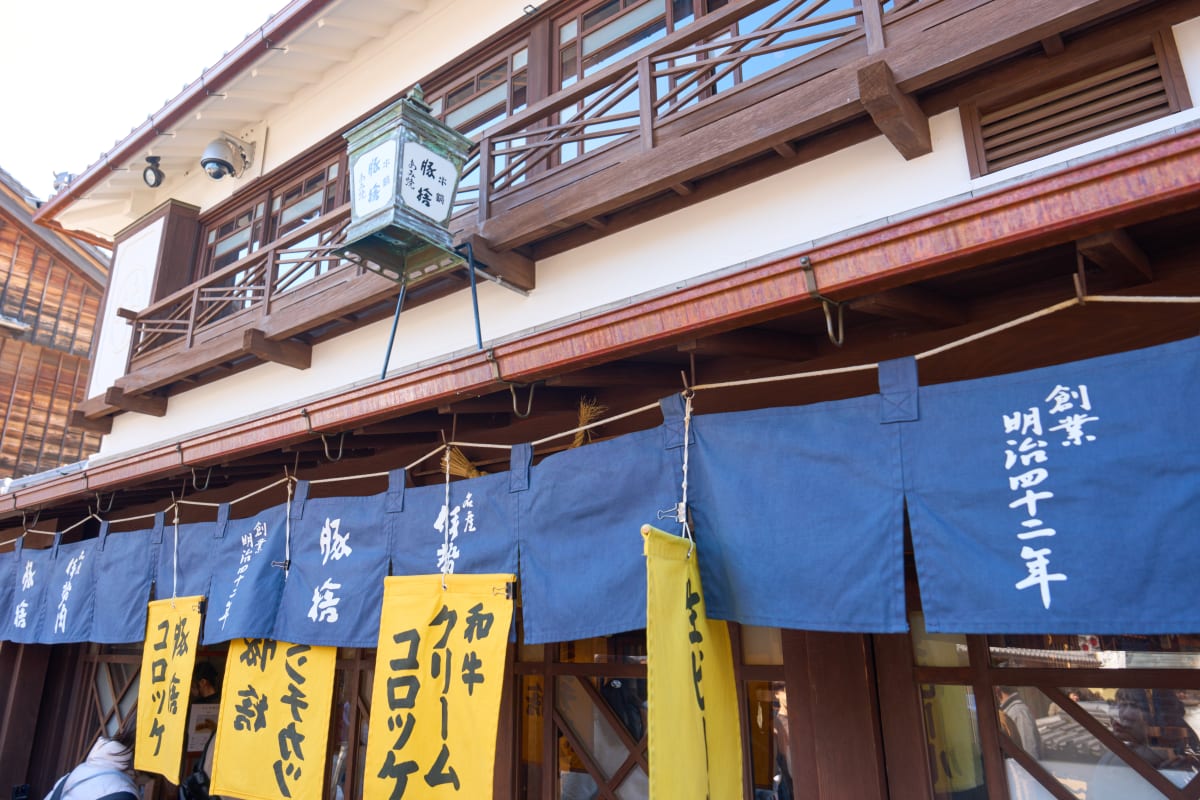
①Ise udon (fat soft noodles in tamari sauce, ¥550) ②Tekone-zushi (fisherman-style marinated bonito sushi, ¥1,500) ③Ise beef skewers (local Black Wagyu, ¥1,000) ④Matsusaka beef nigiri (luxe, ¥1,000+ per piece) ⑤Buta-sute croquettes (¥100). Walking-and-eating pairs naturally with townscape photography.
Etiquette for photographing inside shops?
Inside-shop photography is generally OK with a quick word to staff. Avoid photographing products without buying. Be considerate when including tourists or shopkeepers. Tripods aren't usable on narrow streets; mind your strap in tight aisles. Early morning 7–8 AM offers the bonus of shopkeepers preparing — beautiful subjects.


More in Mie
Related Content
Collections & Tags