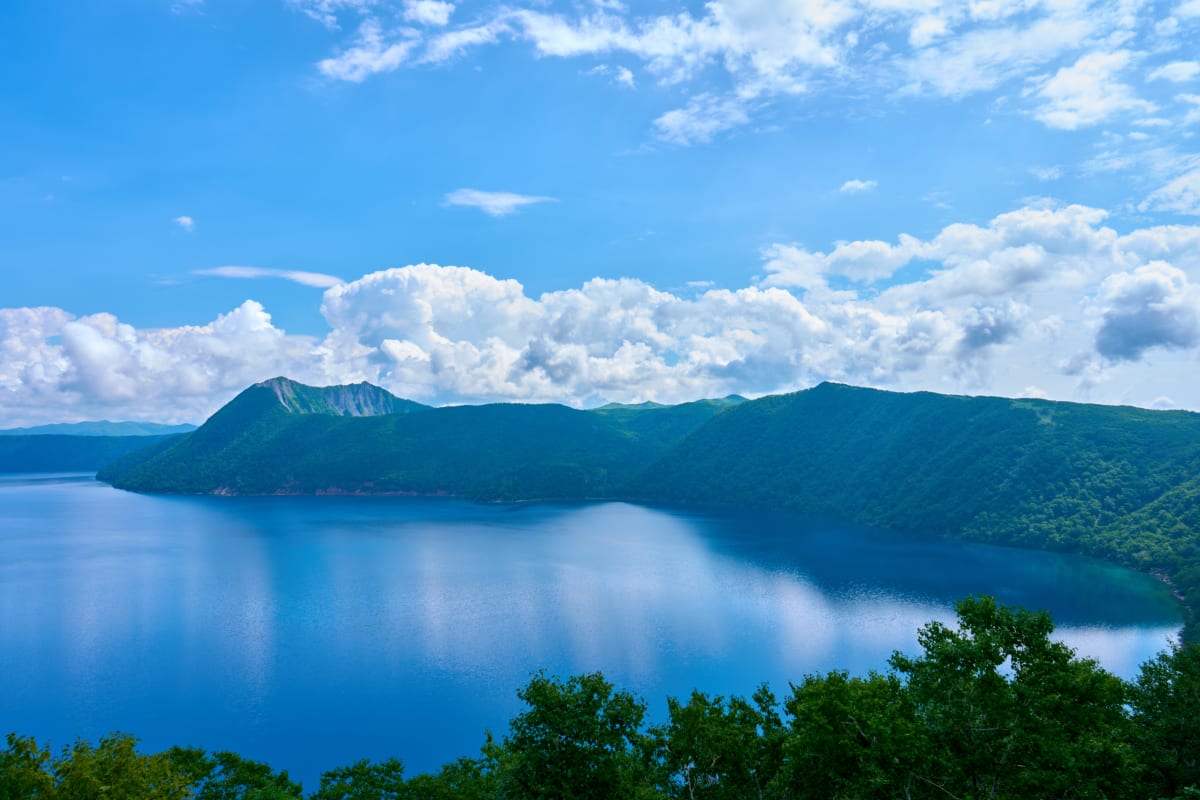
摩周湖
北海道· Lake Mashu
Lake Mashu lies within Akan-Mashu National Park in Teshikaga, Kawakami District, Hokkaido — a double caldera lake formed by a massive eruption about 7,000 years ago, with an area of 19.6 km², a maximum depth of 211 m, and a 20 km perimeter. With no outflowing river, the lake's transparency goes undisturbed; in a 1931 survey it recorded 41.6 m of clarity, then the world's deepest reading (still second only to Lake Baikal). The 200 m-high outer rim — Mt. Kamuinupuri, Mt. Mashu (857 m), and others — surrounds a cobalt-blue water known as «Mashu Blue» that, on clear days, no other lake can match. Often shrouded in mist, it is also called «Misty Mashu,» and became nationally famous in 1965 through the song by Akira Fuse.
亮点与特色
- Mashu Daiichi Tenbodai (First Observatory) — at 670 m elevation, the standard overlook with parking and a rest house
- Mashu Daisan Tenbodai (Third Observatory) — at 800 m, higher than the first; closed in winter, but offers views all the way to Lake Kussharo
- Mashu Blue — the cobalt-blue water on clear days, especially around midday when the sun is highest
- «Misty Mashu» — the mystical sight of mist covering the surface, present about 70% of the year (with only 30% clear viewing)
- Mt. Mashu (857 m) — the outer caldera rim, climbable (4-hour round trip) for a unique angle looking down on the lake
快速问答
What is Lake Mashu?
A double caldera lake in Akan-Mashu National Park, Hokkaido — 19.6 km² with a maximum depth of 211 m. In 1931 it recorded a transparency of 41.6 m, then the world's deepest. The alternating «Mashu Blue» on clear days and the «Misty Mashu» when shrouded in fog make it a mystical photographic destination.
What are the odds of seeing the lake?
Annual clear-view rate ~30%. Summer is especially misty; winter and spring offer better clarity. Visit all three observatories (Daiichi, Daisan, and Ura-Mashu) to increase your chances. Late morning to midday is best, more so than dawn.
Access?
About 1.5 hours by car from Memanbetsu Airport, 30 minutes by car from JR Mashu Station. The Third Observatory closes in winter — only the First is open then. The Third (800 m) commands views of Lake Kussharo too, a special summer experience.
Difference between the three observatories?
First (670 m, ¥500 parking, with rest house and shop, open year-round); Third (800 m, free parking, panoramic view including Lake Kussharo, closed in winter); Ura-Mashu (585 m, north-side view, lower fog probability). The standard practice is to visit all three.
Can I walk down to the lakeshore?
Access is strictly restricted. The entire perimeter is a Special Protection Zone — no legitimate route to the water exists. As a sacred lake to the Ainu people, used for ancient rituals, only views from the observatories are possible.
Onsen nearby?
Kawayu Onsen (15 min by car, strong acid sulfur, steam-rising town), Wakoto and Sunayu on Lake Kussharo (free wild baths welling up from the lakebed, anyone can enter), and Mashuko Onsen (the only onsen near the lake). In winter, snow-bath views are dreamlike, with steam and snow in stunning contrast.