Omgeving Kiyomizu-dera
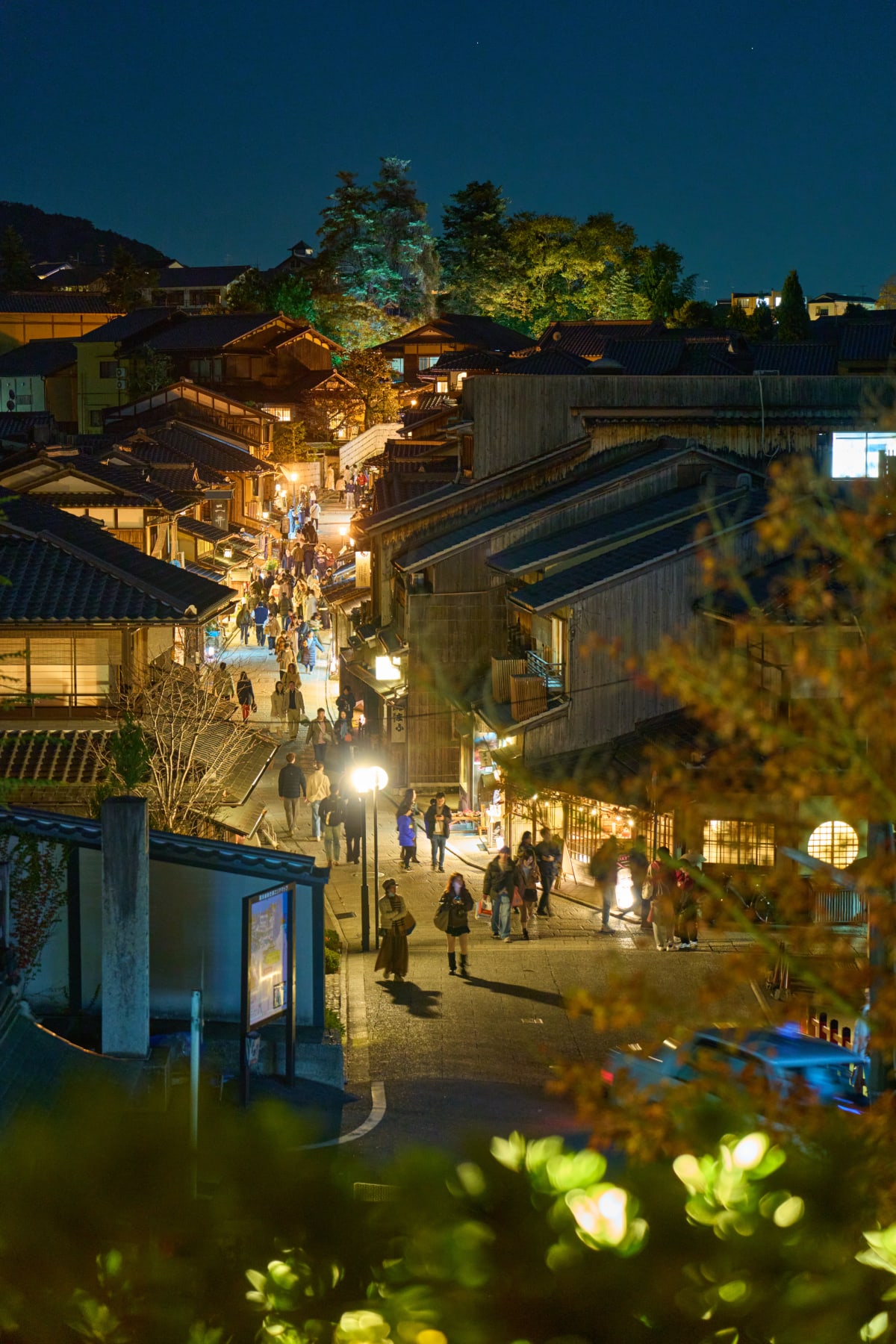
The lanes around Kiyomizu-dera (Kiyomizu-dera shu-hen) form the approach district to the temple in Kyoto's Higashiyama Ward, including Sannenzaka, Ninenzaka, Kiyomizuzaka, and Yasaka-dori — a Designated Important Preservation District for Groups of Traditional Buildings, where Edo-to-Meiji-era machiya houses line stone-paved streets. The district's icon, the Yasaka Pagoda (Hokan-ji), is a 46 m five-story pagoda — said to have been founded by Prince Shotoku in the late 5th century, with the current structure dating to 1440 — that defines Kyoto's old-city skyline. Compositions combining narrow stone-paved slopes, lattice-fronted machiya, kimono-clad visitors, and the pagoda are beloved by photographers worldwide, drawing several million visitors a year as Kyoto's quintessential photographic district.
Highlights
- Sannenzaka — a stone-stepped slope laid out in the 1740s; framing the Yasaka Pagoda over Edo-era streetscapes makes a classic shot, with cherry blossoms or autumn colors as borrowed scenery
- Ninenzaka — a gentler slope above Sannenzaka, with Meiji-era machiya, stone paving, and atmospheric lantern light at dusk
- Yasaka Pagoda (Hokan-ji) — the 46 m five-story tower; looking up from below on Yasaka-dori is the iconic worldwide composition
- Nene-no-Michi — a stone-paved path leading to Kodai-ji, named for Nene (wife of Toyotomi Hideyoshi), popular for kimono dressing experiences
- Kiyomizuzaka — the main approach to Kiyomizu-dera, with souvenir shops and Kyoto-style atmosphere; photograph after the evening crowds disperse