Kasteel Himeji
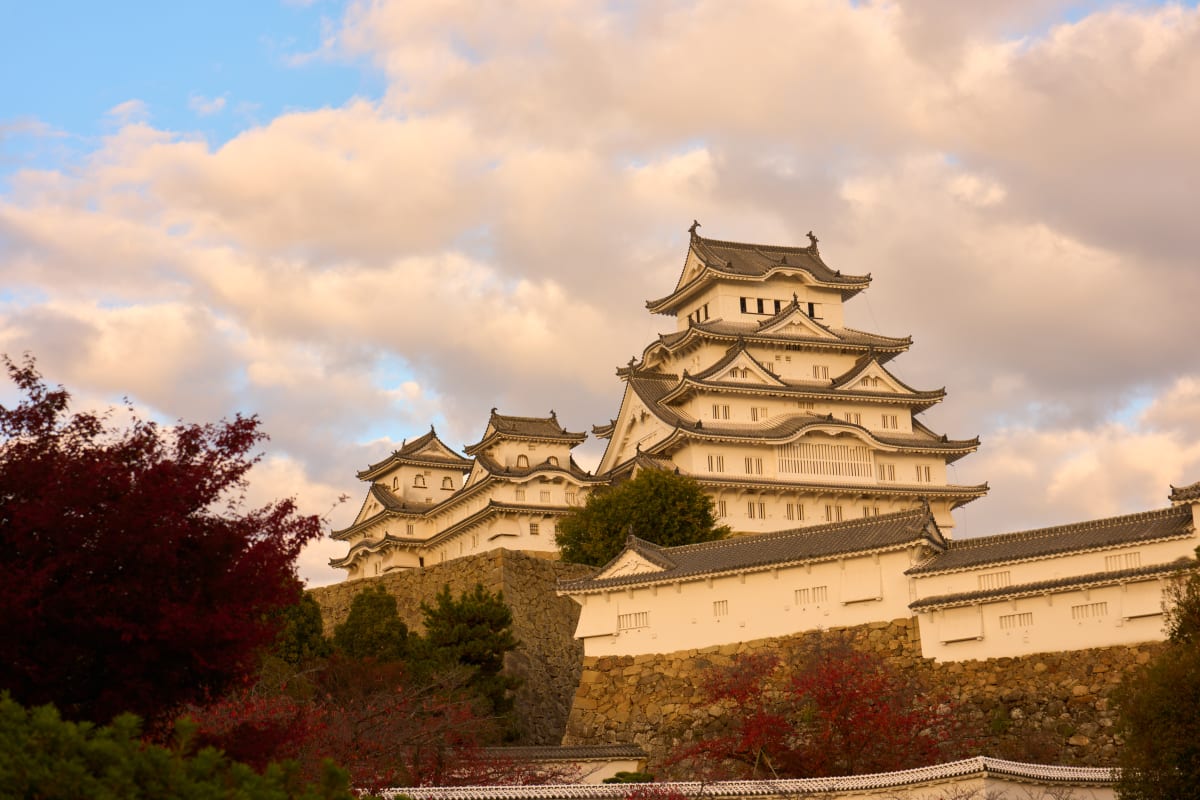
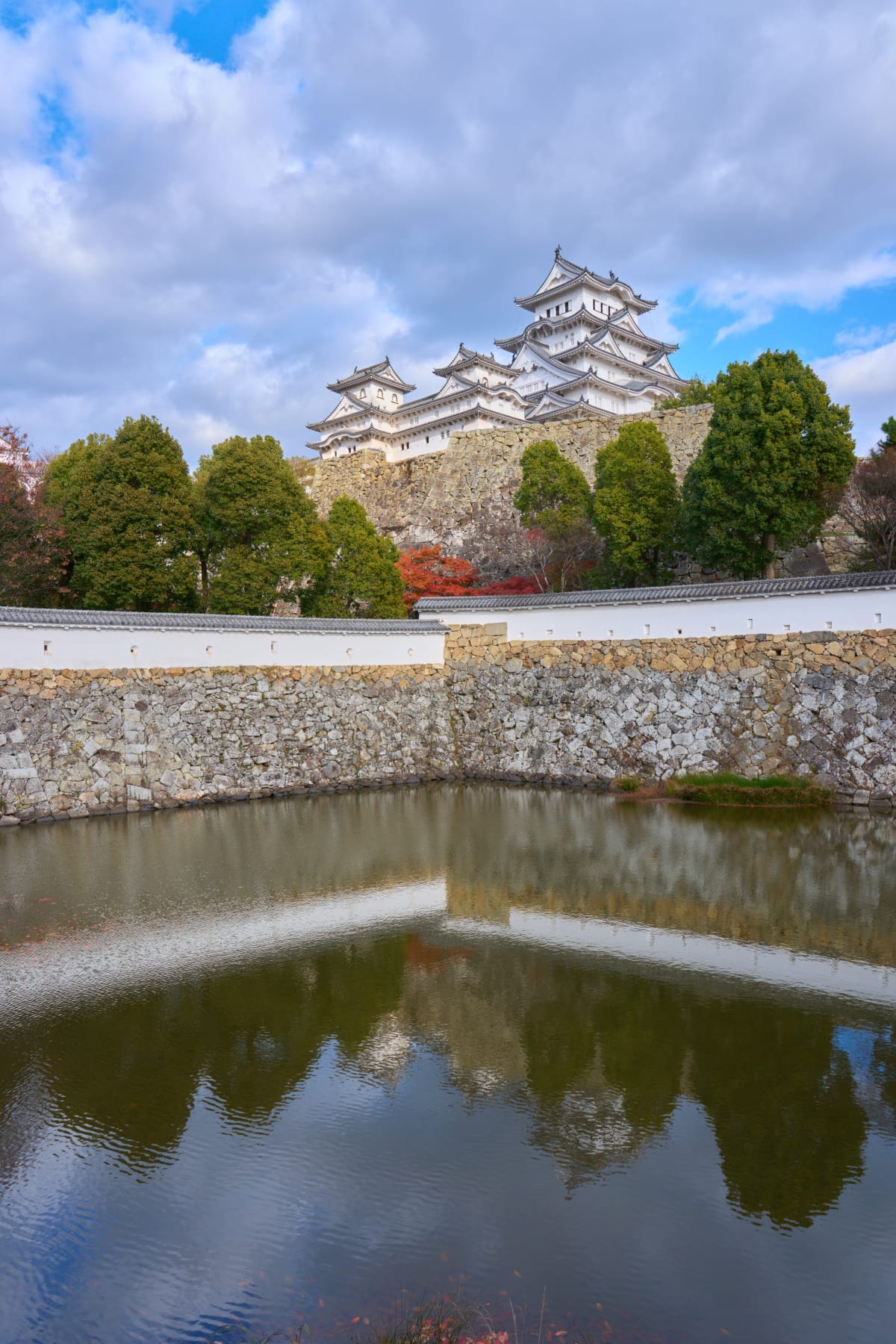
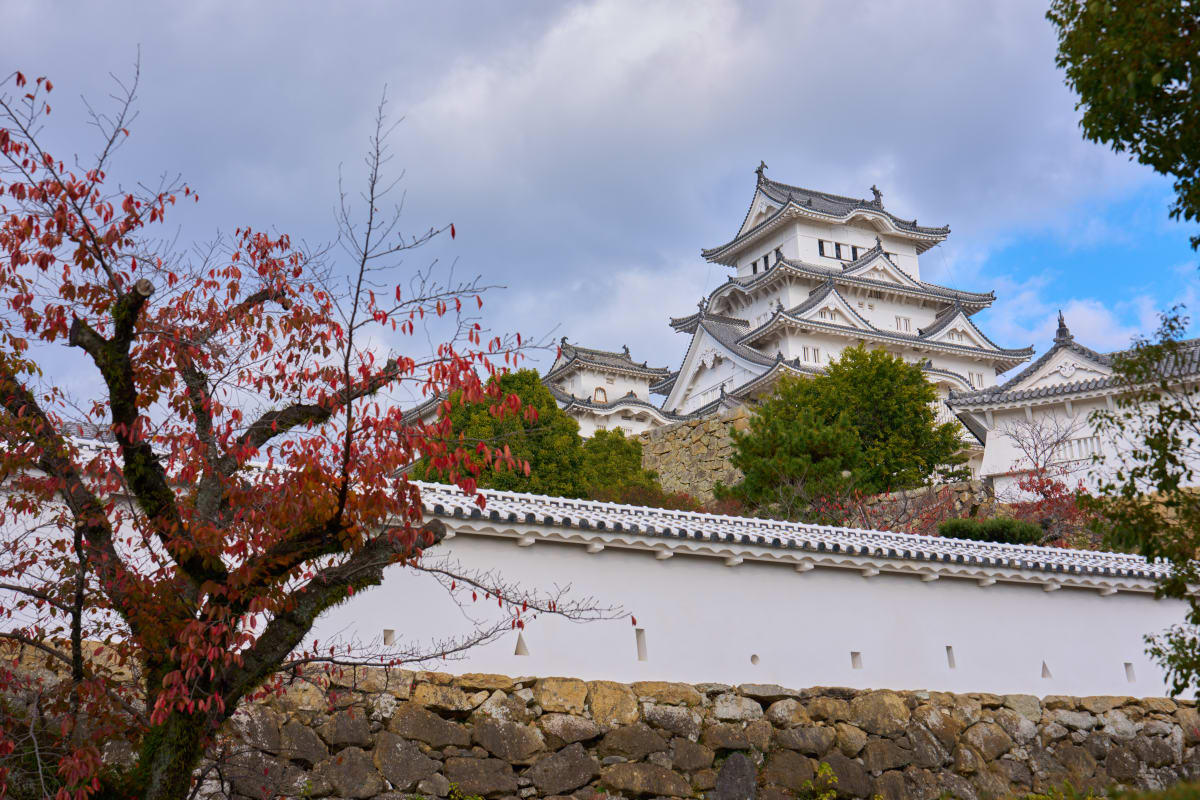
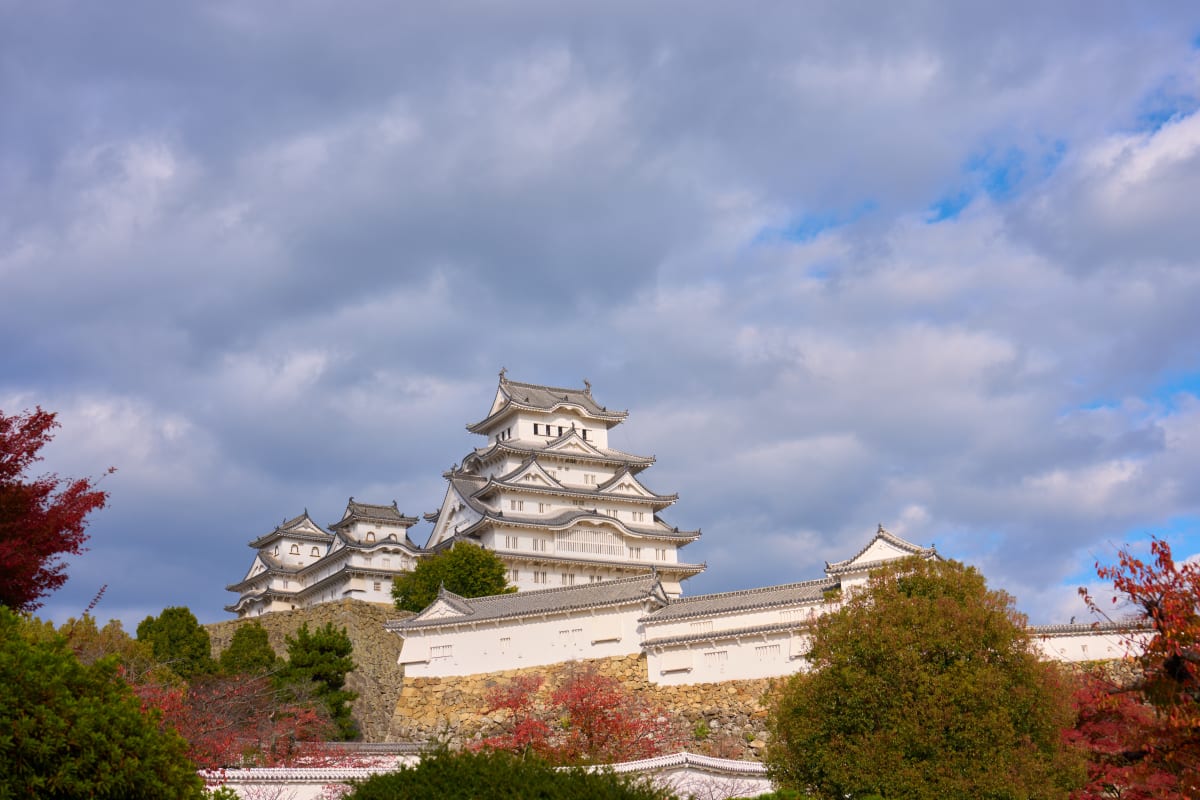
Himeji Castle, located at 68 Honmachi, Himeji City, Hyogo Prefecture, is a flatland-mountain castle whose origins trace to a 1346 fort built by Akamatsu Sadanori, with Ikeda Terumasa carrying out the major reconstruction we see today between 1601 and 1609. One of Japan's largest wooden castles, it was registered in 1993 as Japan's first World Cultural Heritage site (alongside Horyu-ji), making it both the only UNESCO-listed castle among the 12 surviving original keeps and a National Treasure. Its white-stucco silhouette is likened to a white heron spreading its wings, earning the name «White Heron Castle» (Hakuro-jo). After the 2009–2015 «Heisei Restoration» renewed the plaster, its now-pristine white form combined with cherry blossoms, fresh greenery, or snow creates a portrait of Japan that few other places can match.
Highlights
- Great Keep — Ikeda Terumasa's major reconstruction (1601–1609), the connected five-story-six-floor-plus-basement keep, the largest of Japan's 12 surviving originals
- Sannomaru Plaza and cherry blossoms — at peak bloom in early April, about 1,000 Yoshino cherry trees frame the white keep in the canonical composition
- Nishi-no-Maru Garden — where Princess Sen (wife of Toyotomi Hideyori) lived; the Keshou Yagura turret with autumn colors and the keep's side profile
- Shirotopia Memorial Park — northeast of the castle, a less-crowded vantage with cherry blossoms and the keep from above
- Otoko-yama Park — a hilltop northwest of the castle offering a hidden frontal aerial view of Himeji Castle
Quick Answers

Practical Information
- Access
- 15-min walk from JR Himeji Station. 50 min by Shinkansen from Shin-Osaka.
- Parking
- Multiple paid lots ¥600-1,000/day.
- Admission
- Castle ¥1,000. Combined with Kokoen ¥1,050.
- Duration
- 2 hr including keep interior; 3 hr in cherry season.
- Best Time
- Early April cherry blossoms; arrive before 9 a.m. opening.