LocationsBlogCollectionsSearchContact

Mt. Kiro Observatory

Ehime

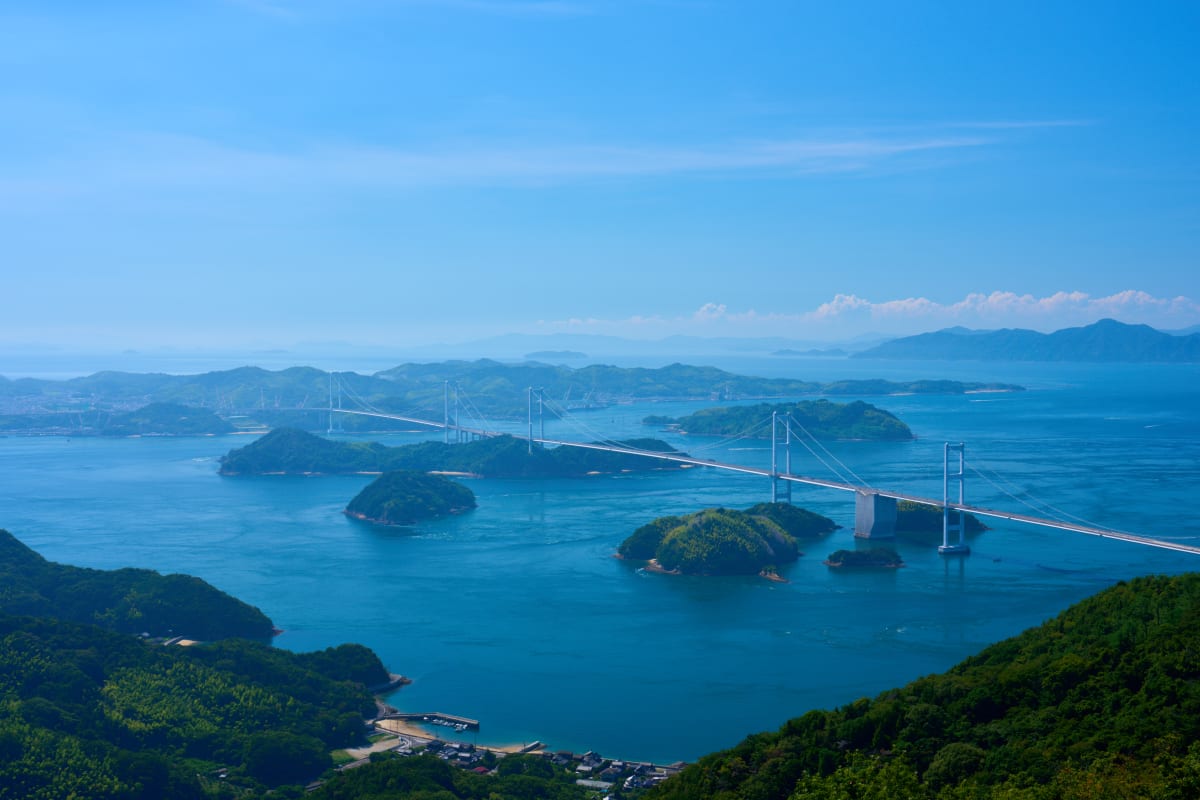
Mt. Kiro Observatory, located at 487-4 Minamiura, Yoshiumi-cho, Imabari City, Ehime Prefecture, sits atop the 307 m summit of Mt. Kiro at the southern tip of Oshima Island. Designed by world-renowned architect Kengo Kuma as an «earth-integrated» viewing deck, it was completed in 1994 and won the ARCASIA Gold Medal for Architecture in 1995. The observatory is buried into the ground so that the mountain's outline remains intact — viewed from above, it appears as a park, an innovative design. Below lie the 4,105 m Kurushima-Kaikyo Bridge (the three-section suspension bridge), the Inland Sea's countless islands, and on clear days even Mt. Ishizuchi (1,982 m, West Japan's tallest peak). The interplay of sunset, bridge, sea, and islands makes it one of the Inland Sea's premier sunset locations.

Highlights

  • Earth-integrated observatory by Kengo Kuma — completed 1994, ARCASIA Gold Medal winner; an innovative design that preserves the mountain's silhouette
  • Bird's-eye view of the Kurushima-Kaikyo Bridge — the 4,105 m three-section suspension bridge from above, with sunset light as the canonical window
  • Inland Sea's multi-island beauty — Omishima, Hakatajima, Oshima, and the Geiyo Islands strung together, blue sea against green islands
  • Distant Mt. Ishizuchi — West Japan's tallest peak (1,982 m), visible only on clear days, especially crisp winter mornings
  • Sunset to blue hour — among West Japan's finest sunset spots; bridge, sea, islands, and sky shift from orange to blue
Quick Answers

What is Mt. Kiro Observatory?
An earth-integrated observatory atop the 307 m Mt. Kiro on Oshima Island, Imabari, Ehime, designed by world-renowned architect Kengo Kuma (completed 1994, ARCASIA Gold Medal). It offers a 360° panorama of the Kurushima-Kaikyo Bridge and the Inland Sea — among West Japan's finest sunset destinations.
How do I get there?
Shimanami Kaido bus from Imabari or Fukuyama (alight at Kiro-san Tenbo Park-iriguchi, then 30 minutes on foot), by bicycle (with bike parking), or by car (with a parking lot near the summit). About 30 minutes by rental car from Imabari Station; the Shimanami Kaido drive itself is recommended.
Best photography times?
Two windows are unmatched: when sunset light strikes the Kurushima-Kaikyo Bridge, and the blue hour 30 minutes after. In winter, the air is clear enough to see Mt. Ishizuchi, and sunset colors are richest. Weekday mornings best avoid crowds.
What's special about Kuma's architecture?
Designed under the concept «integrate, don't destroy» — the concrete structure is buried in the mountain with a turf-covered roof, so from afar the observatory disappears into the silhouette. The deck rim opens like an aperture in the summit, framing the Kurushima-Kaikyo Bridge like a painting. The building itself is a work of art.
Tripod and gear?
Tripods are OK except during peak crowds. Wide angle (16–35mm) for the observatory + bridge in one frame; telephoto (70–200mm) compresses bridge details and islands; ultra-wide (14mm) emphasizes the architecture's geometry. Plan a 2-hour stay for sunset to night; bring warm clothes, a headlamp, and condensation prevention. 5-min walk from parking to observatory.
When is Mt. Ishizuchi visible?
West Japan's tallest peak (1,982 m, ~60 km west of Mt. Kiro) is visible only on clear, dry days. Winter (Nov–Feb) is most likely, especially the morning after rain when air is cleanest. Shoot southwest with a 70–200mm; capturing Mt. Ishizuchi with the Kurushima-Kaikyo Bridge in one frame is a rare winter privilege.
Mt. Kiro Observatory - Ehime | Landscapes of Japan
2025
Landscapes of Japan

More in Ehime

Kurushima-Kaikyo Bridge
1 photos
Matsuyama Castle
4 photos
Dogo Onsen
4 photos

Related Content

Photography Techniques
Golden HourPanoramaBacklight Photography
Collections & Tags
Coastal#Sunrise#Sunset#Mountain#Panorama

Other prefectures in Shikoku

Tokushima(2)Kagawa(2)Kochi(11)
View all 47 prefectures →