Dogo Onsen
Ehime
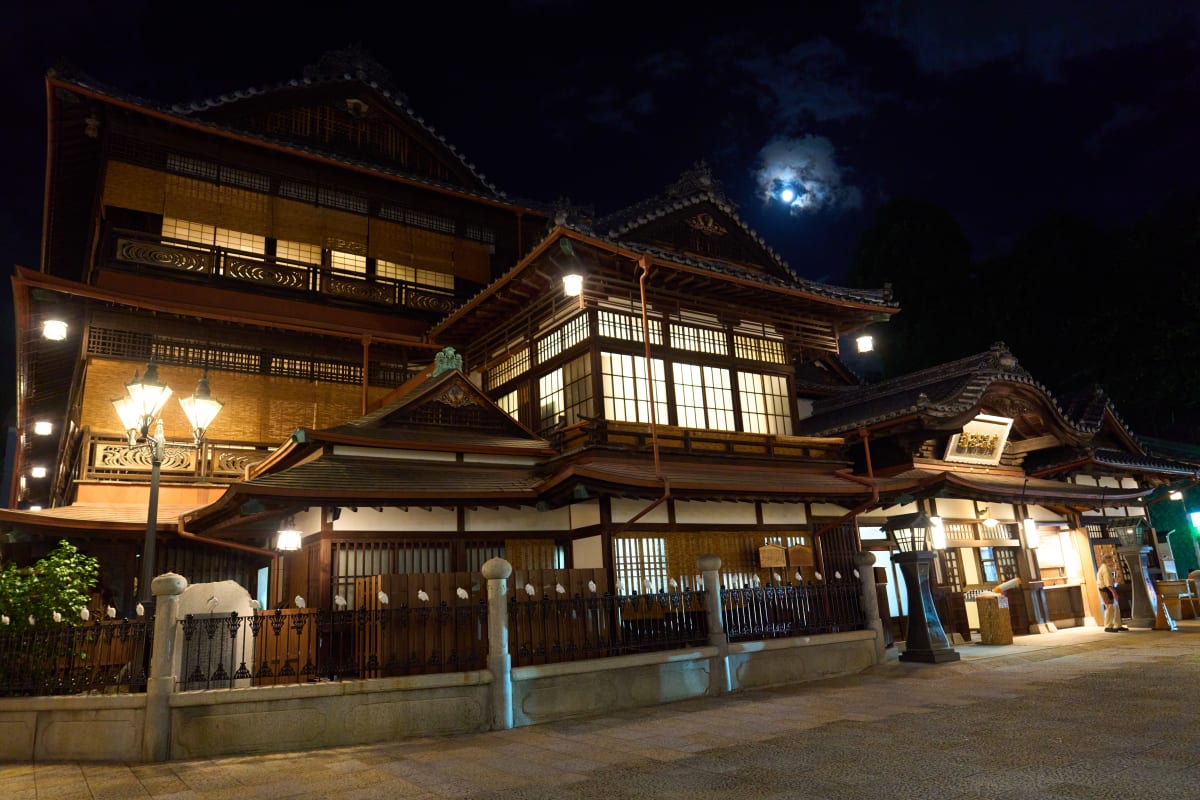
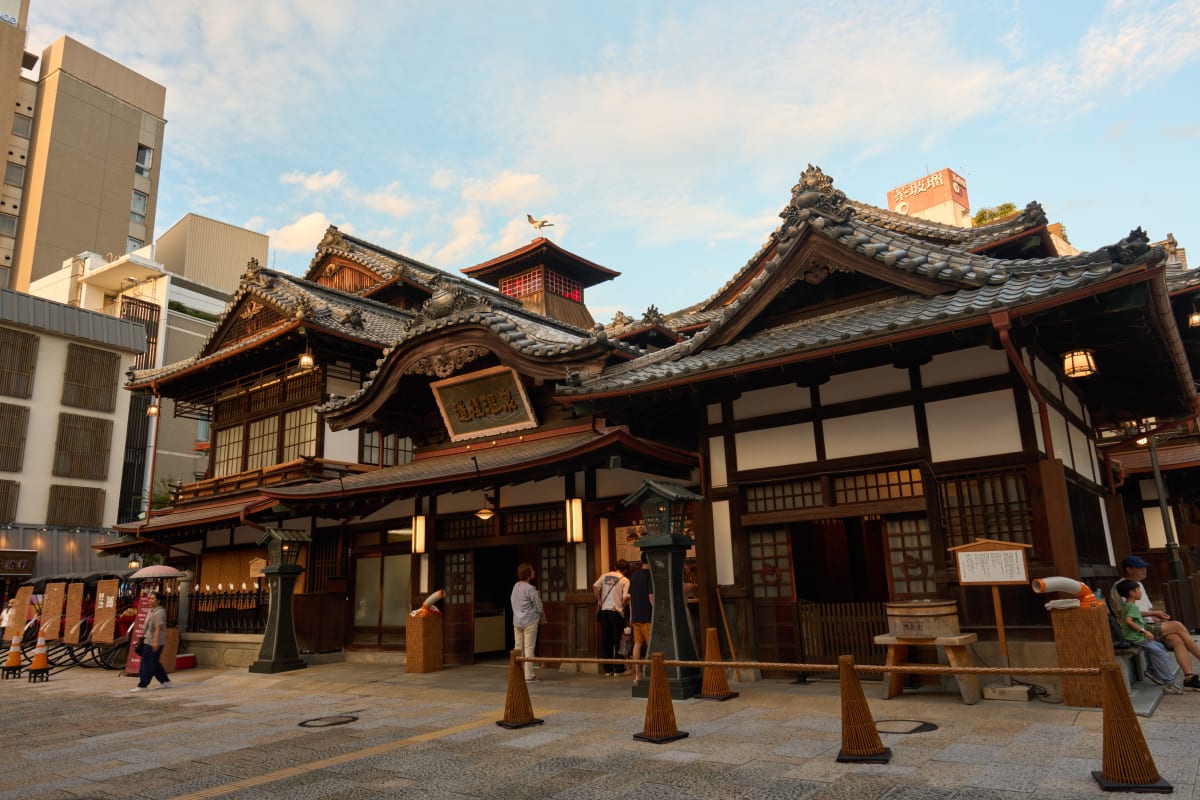
Dogo Onsen, in Matsuyama City, Ehime Prefecture, is one of Japan's oldest hot springs with about 3,000 years of history — appearing in the «Nihon Shoki» and «Manyoshu.» Its centerpiece, Dogo Onsen Honkan, is a wooden three-story Important Cultural Property built in 1894, the setting of Soseki's novel «Botchan» and considered one of the inspirations for the bathhouse in Hayao Miyazaki's «Spirited Away.» With alkaline simple spring water (gentle on skin) and three public bathhouses — Honkan, Tsubaki-no-Yu, and Asuka-no-Yu Spring — plus the surrounding ryokan-lined district, it embodies the hot-spring culture of Shikoku.
Highlights
- Dogo Onsen Honkan — built 1894, an Important Cultural Property; a wooden three-story building blending karahafu and chidori-hafu gables, with magical evening illumination
- Tsubaki-no-Yu and Asuka-no-Yu Spring — annex public baths; less crowded than the Honkan, easier to bathe in. Photography permitted only of exteriors
- Dogo Onsen Station — 1895 terminus of the Botchan Train, with a retro station house and tramway
- Yu Shrine and Isaniwa Shrine — old shrines watching over Dogo Onsen; Isaniwa's vermilion main hall (1667) is an Important Cultural Property
- Yuzuki Castle Ruins Park — the medieval mountain castle behind the onsen; cherry blossom site offering an overhead view including the Honkan
Quick Answers
What is Dogo Onsen?
One of Japan's oldest hot springs (about 3,000 years) in Matsuyama City, Ehime. Dogo Onsen Honkan (built 1894) is an Important Cultural Property, the setting of Soseki's «Botchan» and one of the inspirations for the bathhouse in «Spirited Away» — the very symbol of Shikoku hot-spring culture.
Can I bathe at the Honkan now?
Under major restoration since 2019, with full reopening expected December 2024. Some floors remain open for bathing and viewing during works. The exterior is photogenic both day and night, especially the wooden three-tier illumination in the evening.
Best photography times and etiquette?
Exteriors at dawn (few visitors) and evening/night illumination are the two best windows. Try alley-framed compositions behind the building. Some interior areas are off-limits to respect bathers' privacy — check signage carefully.
How do I get there?
From Matsuyama Airport, the limousine bus takes ~45 min, ¥780. From JR Matsuyama Station, Iyotetsu tram line 5 to «Dogo Onsen» Station, ~30 min, ¥170. 15 min by car from Matsuyama Castle and the Saka no Ue no Kumo Museum. The Botchan Train (a historic Iyotetsu railcar, a few daily) terminates at Dogo Onsen Station for a memorable arrival.
Lodging and bath fees?
Honkan bathing fees range from ¥460 (Kami-no-Yu basic) to ¥1,690 (Tama-no-Yu private 3rd-floor room). Day-bath open 6:00–23:00. Dogo Onsen has 30+ ryokan including Tsubakikan, Yamatoya Honten, and Dogokan (¥15,000–45,000/night with two meals). Free building-tour areas are also available.
What other sights are nearby?
①Dogo Onsen Honkan (shoot both early morning and evening) ②Dogo Haikara-dori (Meiji-retro shopping street) ③Yu Shrine and Isaniwa Shrine (the onsen's guardian shrines; steep stone stairs offer overhead views of the Honkan) ④Matsuyama Castle (15 min by car or tram, one of 12 originals) ⑤Saka no Ue no Kumo Museum (5 min by car). A walk-and-tram day plan covers the center of Matsuyama tourism.


Practical Information
- Access
- Take Iyotetsu tram to Dogo Onsen Station (2-min walk).
- Parking
- Municipal lot ¥400/hr. Park further out during peaks.
- Admission
- Honkan bath admission ¥460.
- Duration
- 2 hr for bath + photography.
- Best Time
- Late afternoon for the building, plus evening illumination.
More in Ehime
Related Content
Collections & Tags