Rochas Meoto-iwa
Mie· Meoto-iwa Wedded Rocks
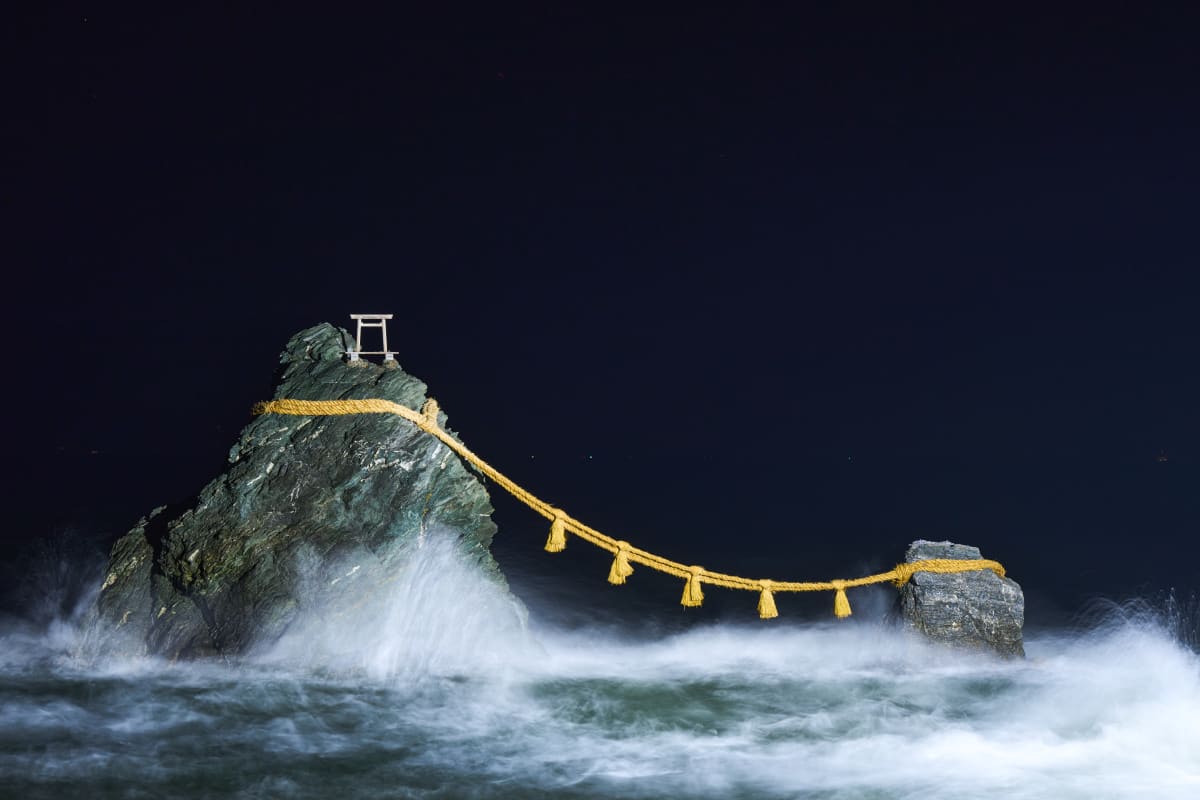
Meoto Iwa («married couple rocks») are two rocks of differing sizes — Otoiwa (male, 9 m) and Meiwa (female, 4 m) — rising from the sea before Futami Okitama Shrine in Futami-cho, Ise City, Mie Prefecture. They are linked by a 35 m, 40 kg sacred shimenawa rope, symbolizing marital harmony and matchmaking. The shimenawa is replaced three times each year (May 5, September 5, mid-December) in shrine rituals. Only around the summer solstice (May to July) does the sun rise directly between the two rocks, producing a world-class spectacle in which the silhouette of Mt. Fuji can also be seen on rare days — one of Japan's rarest photographic alignments.
Highlights
- Meoto Iwa — Otoiwa (male, 9 m) and Meiwa (female, 4 m), symbol of marital harmony, with the shimenawa replaced in three annual rituals
- Sunrise around the solstice — only May through July does the sun rise between the two rocks; clear-sky odds peak in early June
- Mt. Fuji on the horizon — on rare days, Mt. Fuji's silhouette appears 200 km away; conditions align only briefly between the winter solstice and February
- Futami Okitama Shrine — enshrines Sarutahiko-no-Okami, the purification site visited before pilgrimage to Ise Jingu, with frog statues («buji kaeru,» a homophone for «return safely»)
- Futami Bay coast — an ancient ritual purification site and a mandatory stop on the Meiji-era Ise pilgrimage route, with white-sand shoreline
Quick Answers
What are the Meoto Iwa?
Two rocks rising from the sea before Futami Okitama Shrine in Ise, Mie Prefecture, joined by a 35 m, 40 kg sacred rope. Symbols of marital harmony, they offer one of the world's rarest sights: the sun rising directly between them around the summer solstice.
Specific dates and times for sunrise shots?
Mid-May to late July, peaking around the solstice (June 21). Sunrise 4:40–5:00 AM. Arrive with tripod and telephoto lens an hour before. The miraculous mornings with Mt. Fuji silhouette occur only under specific conditions from December to February.
How do I get there?
15 minutes on foot from JR Futaminoura Station, or 15 minutes by car from Ise Jingu Naiku. Free parking available. For sunrise shoots, arriving before dawn is essential — staying at Futamiura Onsen or Toba accommodations is most practical.
Recommended camera gear?
Tripod essential (long exposure pre-dawn). Telephoto 70–200mm to compress the sun between rocks; wide 16–35mm for sea and sky. ND8 / graduated ND smooths exposure; CPL adjusts reflections. Cloudy days bring rich post-sunrise color. The shoreline calls for salt-spray protection (rain cover, fresh-water rinse afterwards).
When are the rope-changing rituals?
Three times a year — May 5, September 5, and December — Futami Okitama Shrine performs the «Meoto Iwa Onaha Hari Shinji.» Five sections of rope (35 m / 40 kg each, 175 m total) are renewed in a sacred ceremony. Photography is permitted; priests climbing the rocks to tie the ropes is a unique festival subject.
Onsen and lodging?
Futamiura Onsen (seaside ryokan within walking distance of Meoto Iwa), Toba seafood inns (15 min by car), and Ise city hotels. Futamiura is most convenient for sunrise — 3:30 wake, 4:00 departure, 4:30 arrival at the rocks. Lodging from ¥8,000–15,000 with breakfast. For dining, ama-goya (woman diver hut) experiences in Toba (from ¥2,500) are unforgettable.
More in Mie
Related Content
Photography Techniques
Collections & Tags