Praia de Katsurahama
Kochi· Katsurahama Beach
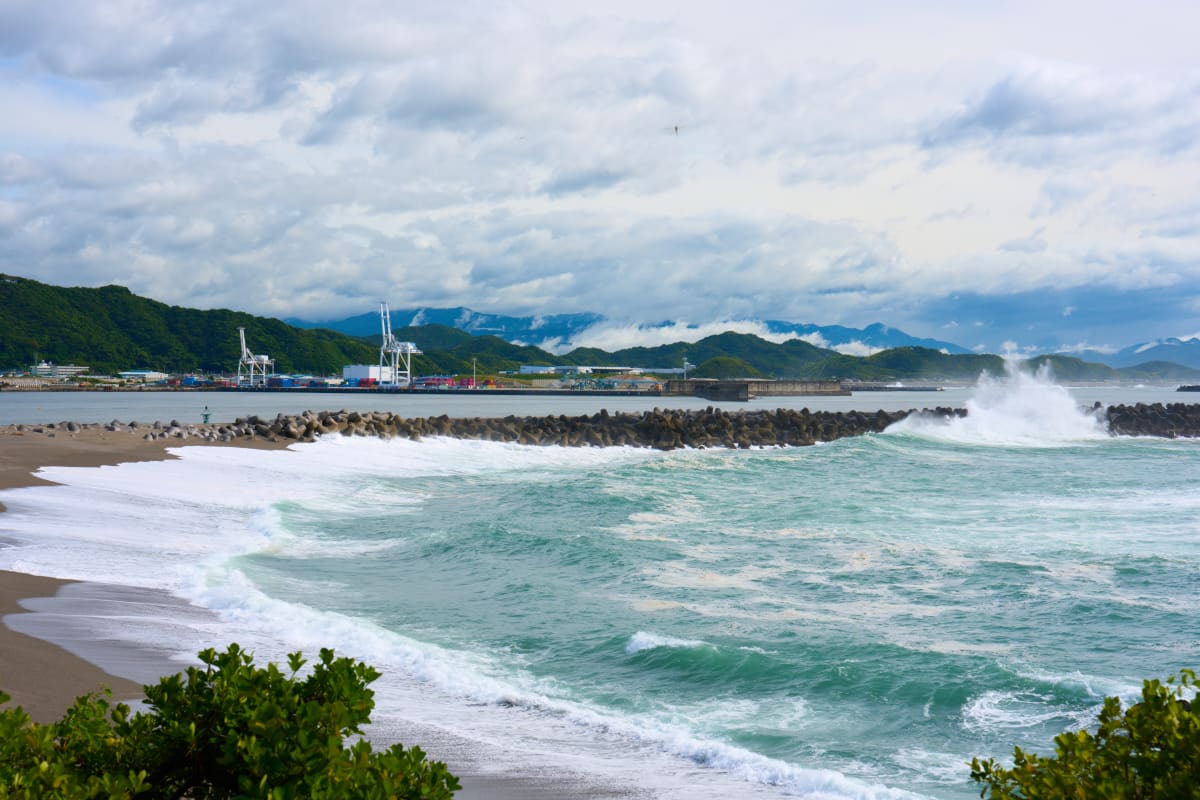
Katsurahama is a 400 m bow-shaped beach at the mouth of Urado Bay in Kochi City, Kochi Prefecture, known since ancient times for its rugged Pacific coast and five-colored pebbles. Praised in the «Kokin Wakashu» as a moon-viewing site, the «moon over Katsurahama» counts among Japan's three classic moon-viewing locations. The bronze statue of Sakamoto Ryoma (erected 1928; 13.5 m including the pedestal, 5.3 m for the figure) gazes out over the Pacific as a symbol of the Bakumatsu reformist's homeland of Tosa. The area forms Katsurahama Park and includes Katsurahama Aquarium, the Sakamoto Ryoma Memorial Museum, and the Ryuomisaki Observatory.
Highlights
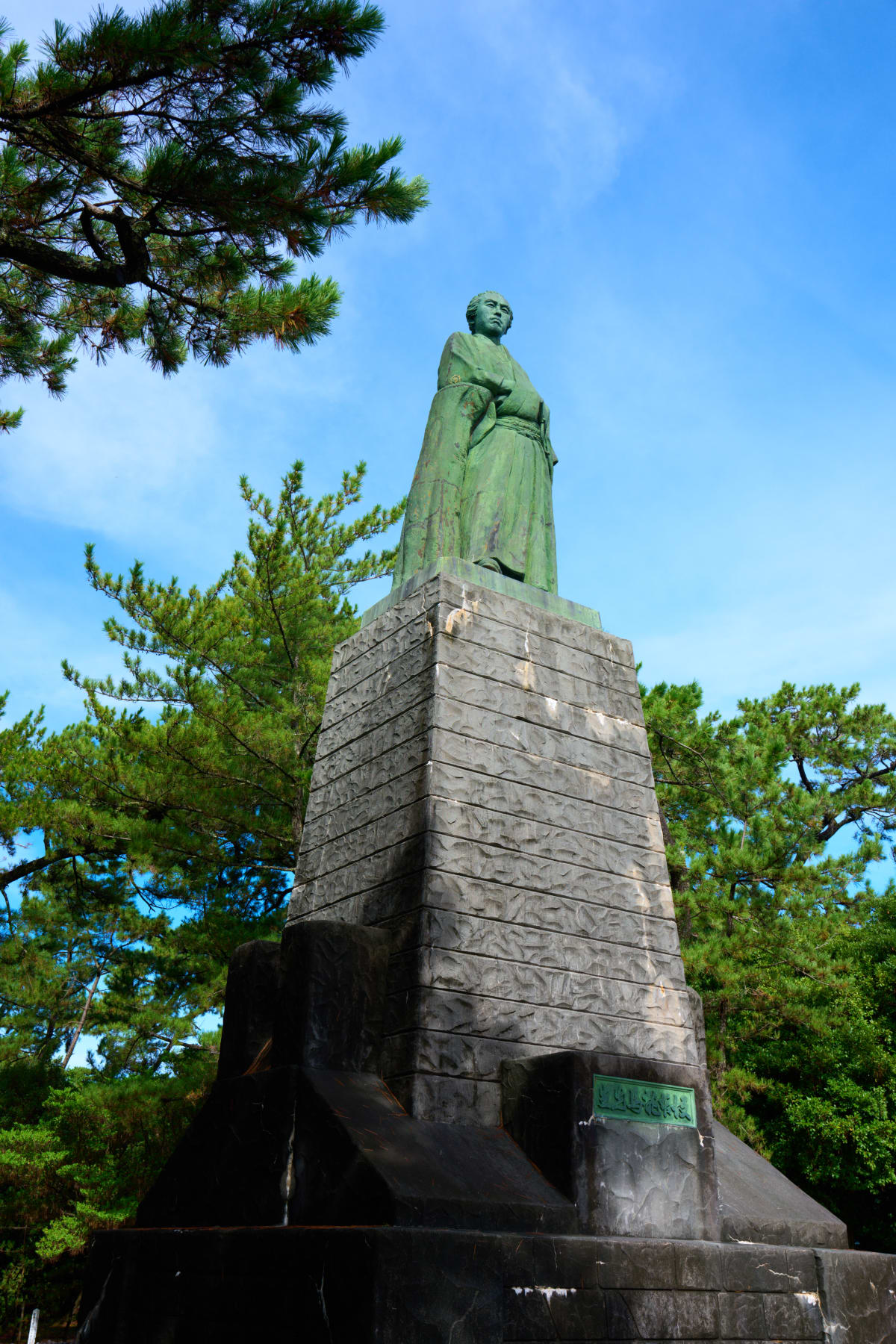
- Sakamoto Ryoma Statue — erected 1928, 5.3 m tall; the Bakumatsu reformist gazing across the Pacific. Climb stairs behind the pedestal for the seaside low-angle composition
- Bow-shaped Beach — about 400 m of white sand strewn with multicolored stones (chert, agate, amethyst, and more)
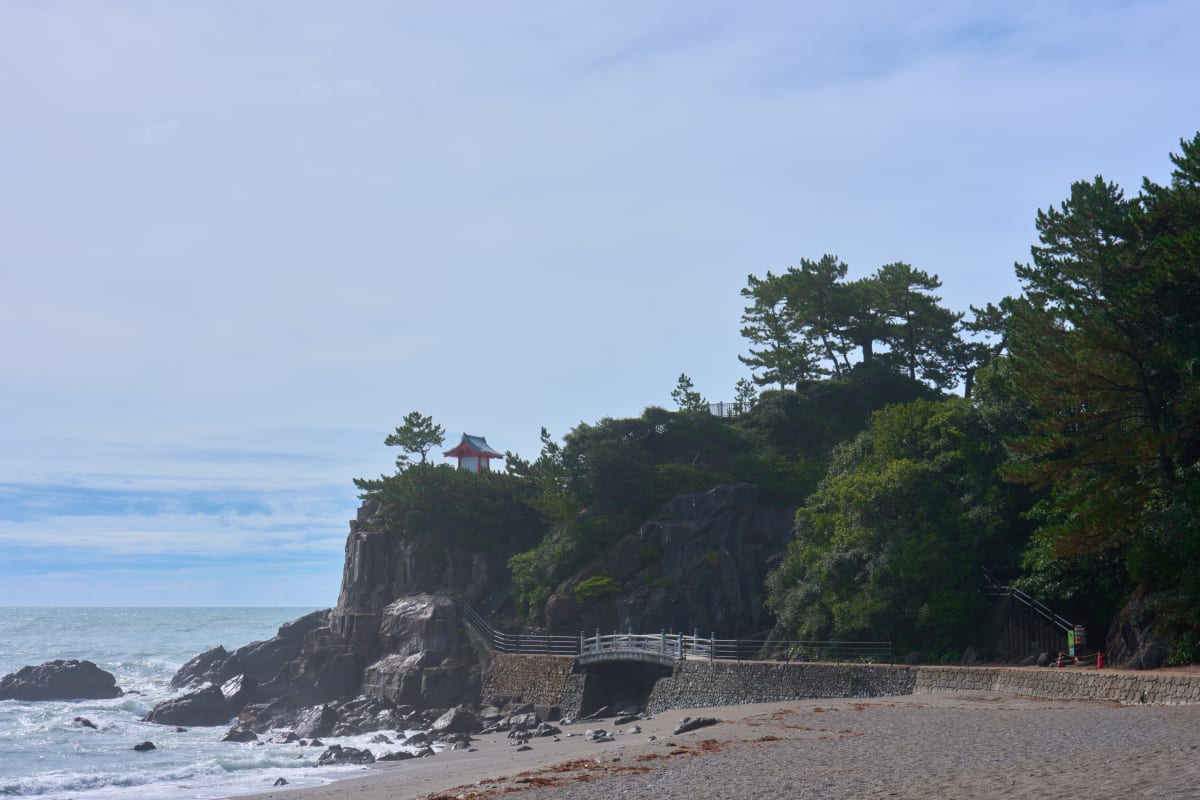
- Cape Ryuo and Ryugu Shrine — a vermilion shrine on the headland, contrasting the surf with the cape itself
- Mid-Autumn Moon — the «moon over Katsurahama,» celebrated for centuries; the «Meigetsu Ekin Festival» is held in mid-autumn
- Katsurahama Aquarium — opened in 1931; with a Pacific Ocean backdrop, the show stadium photographs spectacularly
Quick Answers
What is Katsurahama?
A 400 m bow-shaped beach in Kochi City facing the Pacific, celebrated in the Kokin Wakashu as a great moon-viewing site. The Sakamoto Ryoma statue makes it «the symbol of Tosa,» and the surrounding Katsurahama Park includes an aquarium, the Ryoma Memorial Museum, and observatories — Kochi's largest sightseeing site.
Best angle for the Ryoma statue?
From low angle on the seaside, reached by climbing the stairs behind the pedestal — pairs Ryoma with the Pacific backdrop. Sunset gives a striking silhouette; clear daytime light produces a sky-blue portrait. Both work.
Best photography times?
Sunrise (with the sun rising over the Pacific to the east) and twilight (with the western sun illuminating the statue) are best. The mid-autumn full moon (September) is especially rare — moonlight over the sea. Winter's pounding surf is also dramatic.
How do I get there?
From JR Kochi Station, the «MY Yu Bus» direct from «Kochi Eki-mae» to «Katsurahama» takes 30 min, ¥490. From central Kochi, 20 min by car (parking ¥500 / large vehicles ¥1,000). The Katsurahama Hanakaido coastal road offers great scenery. Allow 2–3 hours for the beach itself, or a full day with the Ryoma Memorial and Aquarium.
Can I take the colorful stones home?
No — the colorful stones are part of the natural monument and an ordinance forbids removal. If you pick one up, return it. Photography is free; macro lenses capture the stones beautifully. Their mix of chert, agate, amethyst, and other minerals reflects the geology of Shikoku's mountains and Kuroshio current dynamics.
Combined sightseeing route?
①Katsurahama itself (early morning, Ryoma statue) ②Ryoma Memorial Museum (5 min by car) ③Katsurahama Aquarium (adjacent, retro architecture) ④Central Kochi (20 min by car, Hirome Market for Tosa-style bonito tataki) ⑤Kochi Castle (one of 12 originals, 30 min by car). A standard one-day route covering Tosa's history, culture, and nature.
More in Kochi
Related Content
Photography Techniques
Collections & Tags