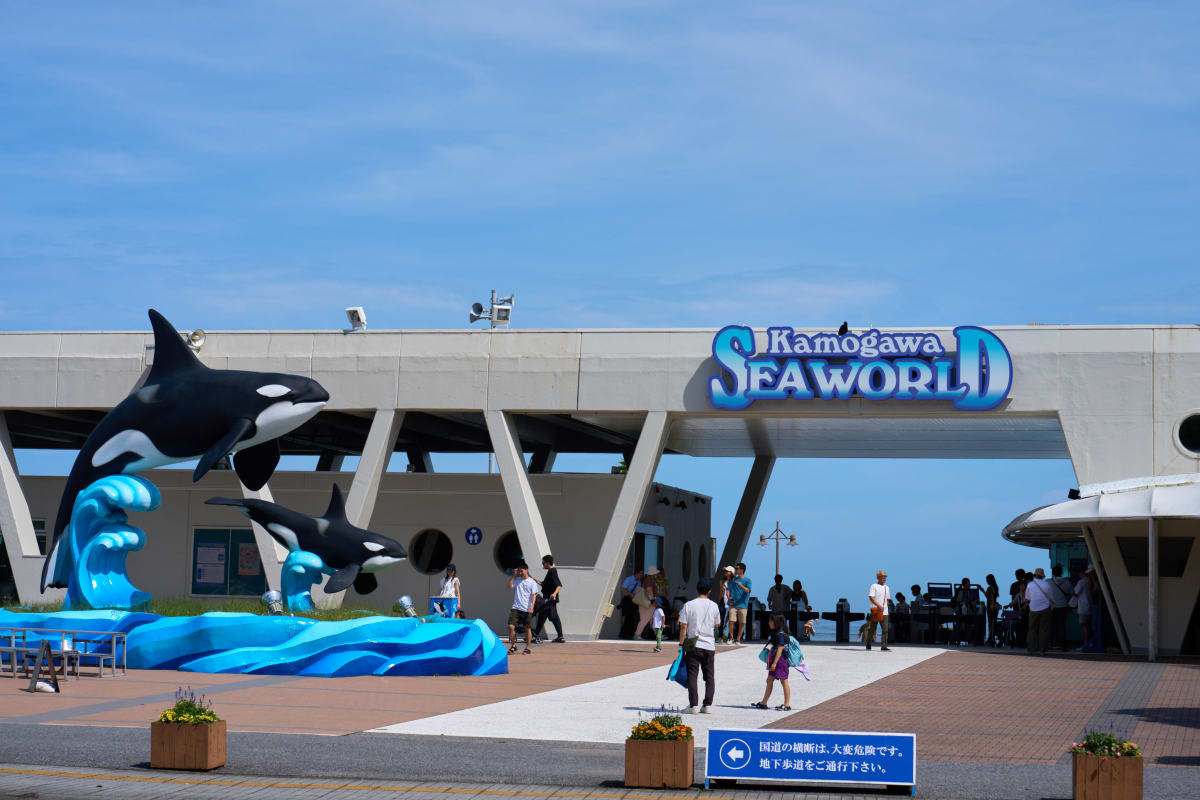
Kamogawa Sea World
Chiba
Kamogawa Sea World, located at 1464-18 Higashi-machi, Kamogawa City, Chiba Prefecture, is a comprehensive marine theme park and one of Japan's longest-running aquariums, opened in 1970 (Showa 45). Housing about 11,000 marine creatures across 800 species, it is one of only two Japanese facilities currently keeping orcas (the other being the Port of Nagoya Public Aquarium) and is renowned for its orca performances. Three to four times a day, the orca show is held in the «Ocean Stadium» main pool with 2,000 seats, set against the Pacific Ocean for spectacular scale. With strong beluga, bottlenose dolphin, sea lion, and penguin shows, and just 2 hours from Tokyo by limited express, it is a favorite of families and photographers.
Highlights
- Orca Show (Ocean Stadium) — 2,000 seats, three to four times daily against the Pacific, a spectacular performance
- Beluga Show — second only to the orcas in popularity; the white body against the blue water is dreamlike
- Bottlenose Dolphin Show — the moment of a great leap, with the Pacific behind; freeze splashes at 1/1000s+ shutter
- Rocky World (Sea Lions and Penguins) — recreates the polar ecosystem, with natural light making the perfect photographic space
- Pacific View — the city's coastal setting means the Ocean Stadium's backdrop is the real Pacific
Quick Answers
What is Kamogawa Sea World?
A comprehensive marine theme park in Kamogawa City, Chiba Prefecture, opened in 1970, with about 11,000 marine creatures across 800 species. As one of only two facilities in Japan keeping orcas, with shows set against the Pacific, it is hugely popular with families and photographers.
Tips for orca photography?
Shutter speed 1/1000+ to freeze splashes; burst mode is essential. Front rows get soaked — choose seats carefully (rain protection required). Anticipate the leap moments. Open-water surfaces photograph better than through glass.
Access and best timing?
From Tokyo, the Wakashio limited express runs about 2 hours; from JR Awa-Kamogawa Station, a free shuttle bus runs 10 minutes. Shows are held 3–4 times daily; morning lighting is softer for photography. The first weekday-morning show best avoids crowds.
Admission and time required?
Adults (high-school and up) ¥3,300, children (elementary/middle) ¥2,000, kids (4+) ¥1,300. Open year-round, 9:00–17:00 (seasonal variation). Allow half a day to a full day to see all shows and exhibits. Annual passes (from ¥7,800) are great for repeat visits.
Recommended camera gear?
①Telephoto zoom 70–300mm or 100–400mm (to crop orca/dolphin jumps) ②Weatherproof camera or rain cover (front rows get wet) ③High-ISO-tolerant body (for dim indoor tanks). Tripods can block paths — a monopod is preferred. Flash is forbidden to protect the animals.
Behind-the-scenes orca experience?
Beyond the twice-daily free Orca Performance (reservation required), the paid «Meet the Orcas» tour (¥3,000) goes backstage with hands-on encounters and trainer commentary. Photography OK; very popular with families — book about a week ahead.