Kiyomizu-dera
Kyoto
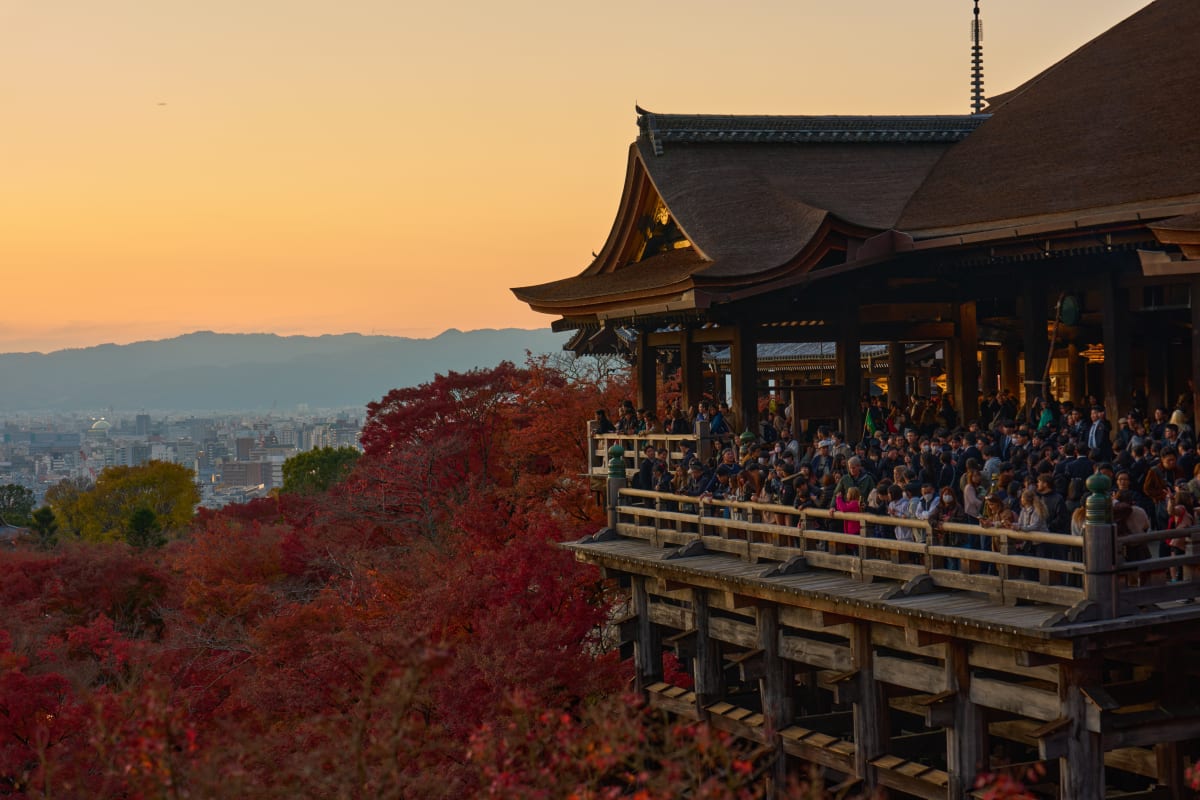
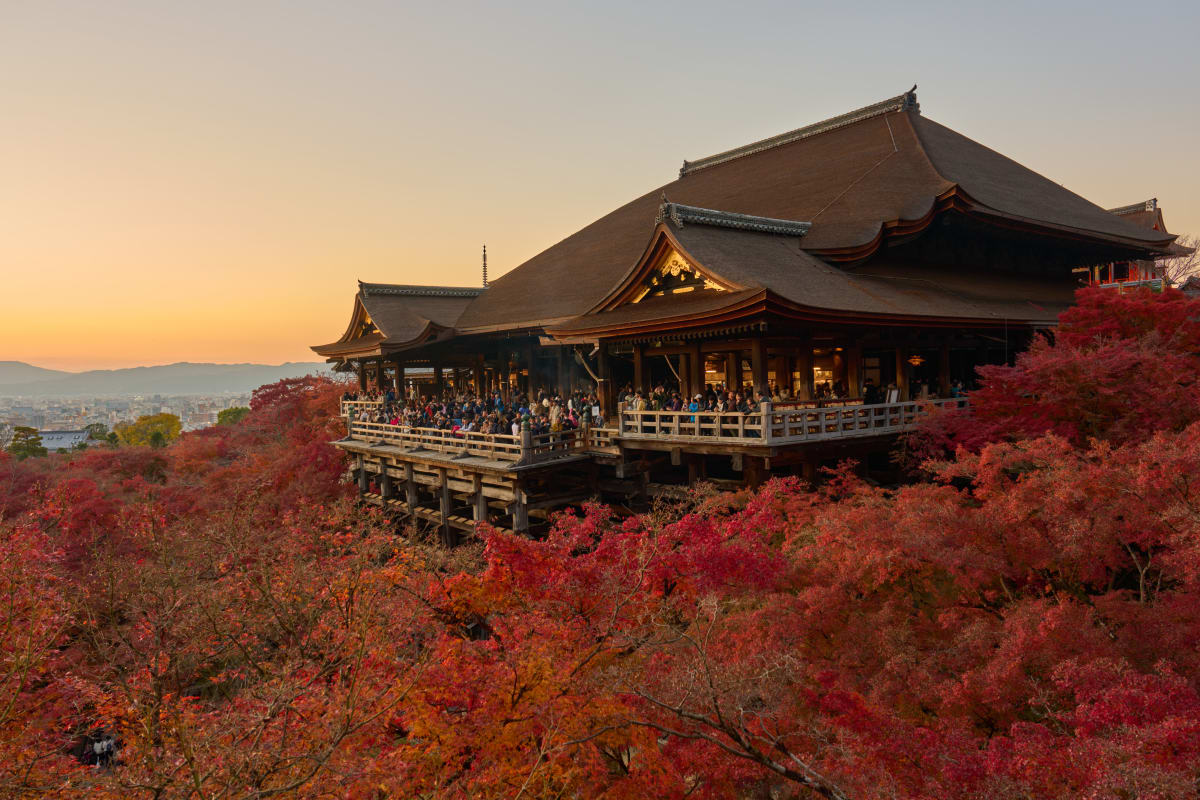
Kiyomizu-dera, founded in 778 in Kyoto's Higashiyama Ward, is an independent Shingon-school temple and a constituent property of the UNESCO «Historic Monuments of Ancient Kyoto.» Its National Treasure main hall — the famous «Kiyomizu Stage» — was built without a single nail using the kakezukuri stilt-construction method, projecting 13 m above a hillside with panoramic Kyoto views. Drawing more than 6 million visitors a year, it is Kyoto's most visited site. Enshrining a thousand-armed Kannon, it has been a center of Kannon worship since the Heian period, and its cherry blossoms, autumn colors, winter snow, and night illumination make it iconic in Japanese photography.
Highlights
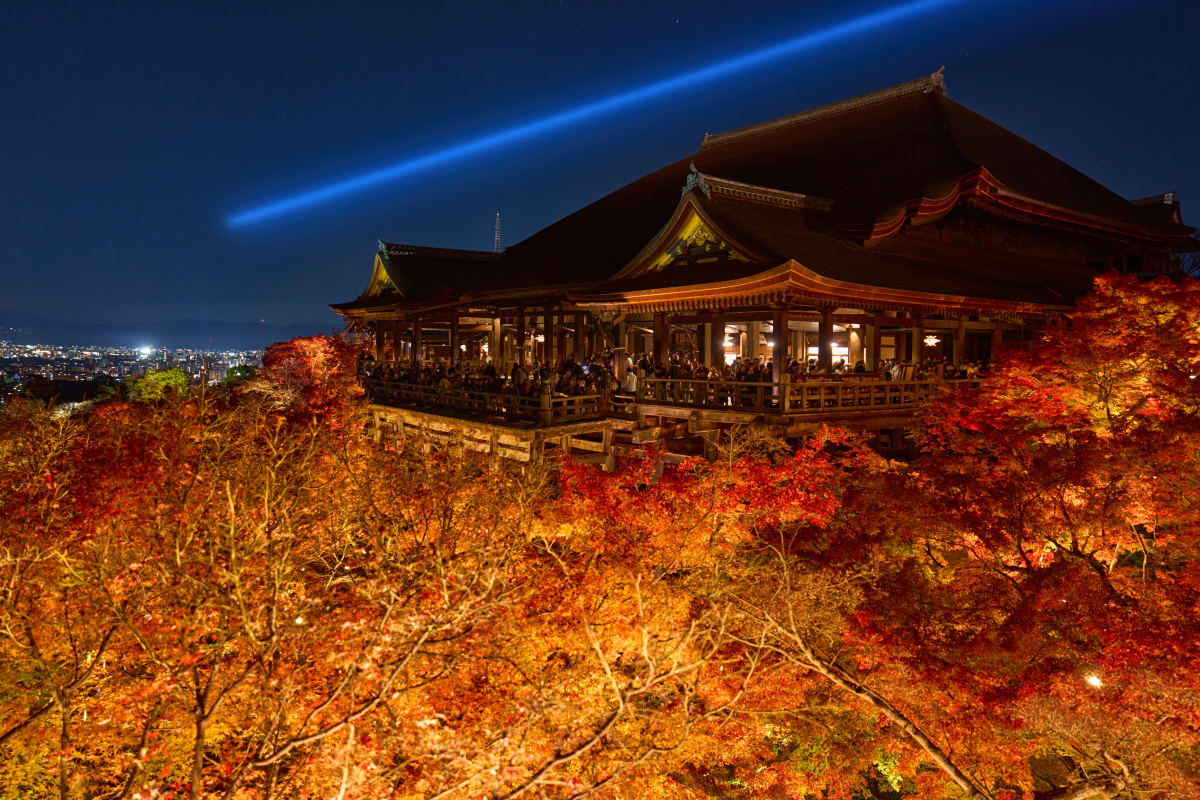
- Main Hall and «Kiyomizu Stage» — National Treasure, built without nails using kakezukuri stilt construction, with a 13 m drop overlooking Kyoto and the cherry/maple canopy
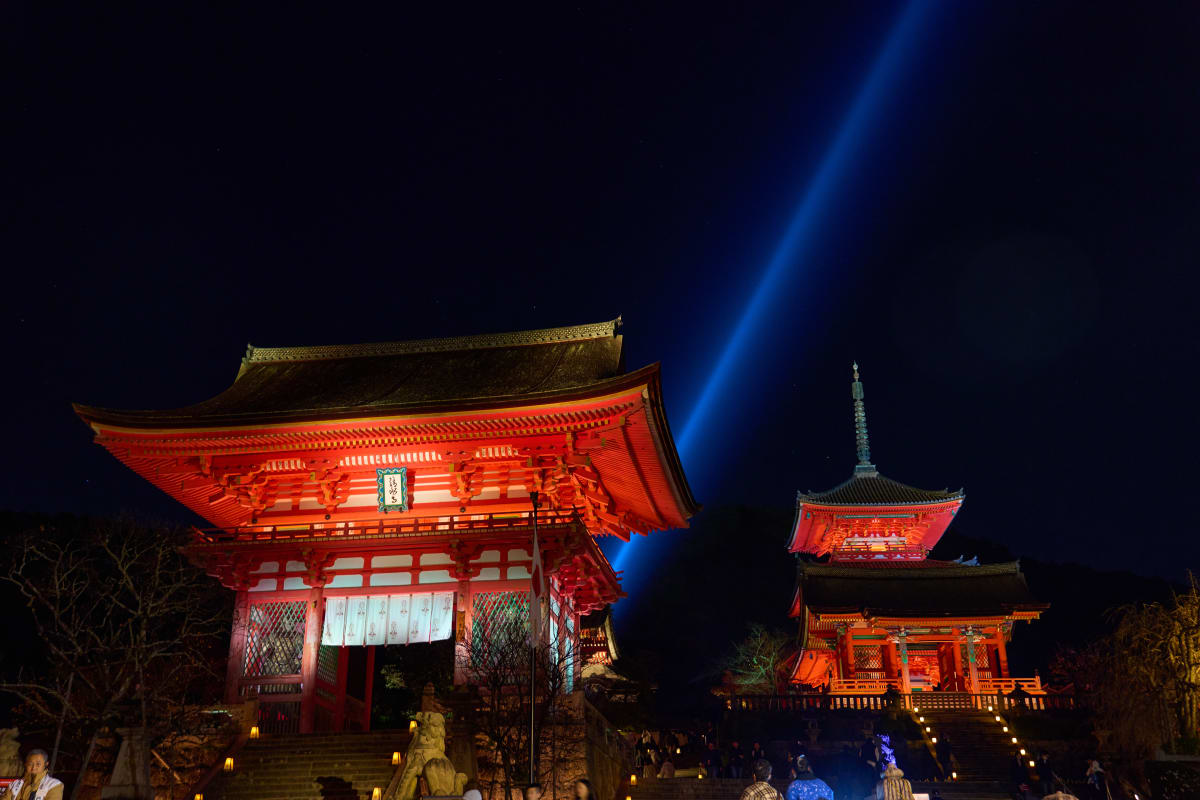
- Three-Story Pagoda (Sanjunoto) — 31 m vermilion pagoda, an iconic Kyoto frame paired with cherry blossoms and autumn foliage
- Niomon and West Gate — vivid two-tier vermilion gates at the top of the Sannenzaka and Ninenzaka approach; the West Gate at sunset is unforgettable
- Otowa Falls — the «sound-of-feathers» triple stream that gave the temple its name; each thread offers a different blessing (study, love, longevity)
- Jishu Shrine — the «matchmaking» shrine behind the main hall, famous for jishu-zakura cherry trees; closed for renovation through 2025
Quick Answers
What is Kiyomizu-dera?
A UNESCO World Heritage temple founded in 778 in Kyoto's Higashiyama Ward. The «Kiyomizu Stage» of the main hall — built without a single nail in kakezukuri stilt construction — projects 13 m above the hillside, offering panoramic city views. Over 6 million visitors annually make it Kyoto's most popular site.
What are opening hours and fees?
Generally 6:00 to 18:00 (varies seasonally), ¥400 for adults. Special evening illumination periods in spring, summer, and autumn extend to ~21:00 (additional ¥700). The 6 AM opening is the quietest and offers the softest light for photography.
When is the best season to photograph it?
Cherry blossoms peak late March to early April, fresh greenery in May, autumn colors late November to early December. The night illumination, held only during special periods, is the most magical. Winter snow shots are rare — possible only a few times a year.
How do I get there?
From Kyoto Station, Bus 206 to «Gojozaka» or «Kiyomizu-michi,» then 10 min walk. Taxi about 15 min, ¥2,000. From Keihan «Kiyomizu-Gojo» Station, ~25 min walk. During peak season, walking is often smoother than the subway+bus combo.
Can I use a tripod?
Tripods are forbidden on the grounds, inside the main hall, and during night illumination. Plan for handheld shooting — bring a fast lens (f/2.8–f/4) and a camera with strong high-ISO performance. Monopods are also forbidden.
What is the origin of «leaping from the Kiyomizu stage»?
In the Edo period, surviving a leap from the stage was said to grant your wish — 234 jumps were recorded (85% survival). Today high railings prevent access. The phrase has become Japanese idiom for «taking a momentous decision.»



Practical Information
- Access
- 10-min walk from «Gojozaka» or «Kiyomizu-michi» bus stops.
- Parking
- Public lot ¥1,000/day. Walking recommended during peak seasons.
- Admission
- Main hall ¥500. Autumn special viewing extra fee.
- Duration
- 1.5-2 hr for the full grounds.
- Best Time
- Mid-Nov to early Dec autumn illumination (17:30-21).
More in Kyoto
Related Content
Photography Techniques