المواقعBlogCollectionsSearchتواصل معنا

جسر ناغويا تشينكاباشي

كوتشي· Nagoya Chinkabashi Bridge

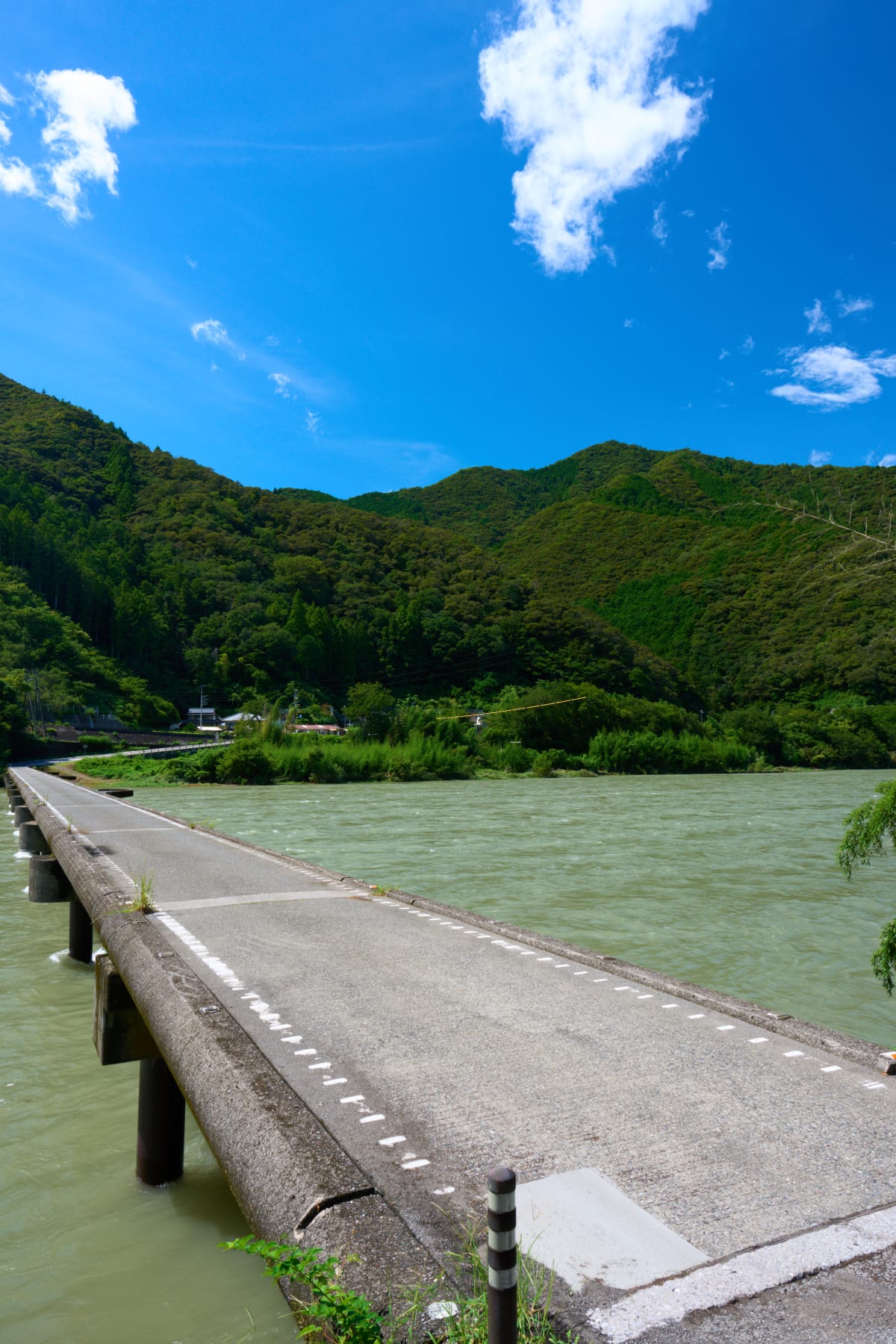
Nagoya Submersible Bridge (Nagoya Chinkabashi), located in Ino Town, Agawa District, Kochi Prefecture, is a 191 m long, 2.5 m wide submersible bridge spanning the 124 km Niyodo River — Japan's «last clear river» — built in 1965 (Showa 40). Submersible bridges (chinkabashi) are uniquely engineered to flood with rising water rather than resist the current, preventing the bridge from being swept away; they have no railings, only a simple deck. The Niyodo carries 48 chinkabashi of various sizes; Nagoya is the most representative. Beneath it flows transparent «Niyodo Blue» water, with riverside stones and mountains on the far bank forming a scene that is the very picture of rural Japan. Locally still in active use as a road, with cars, bicycles, and pedestrians sharing the deck, it remains an unfussy daily-life landscape.

Highlights

  • 191 m long with no railings — the simple form unique to submersible bridges, with functional beauty hidden in their flood-tolerant design
  • Niyodo Blue — the transparent waters of Japan's «last clear river,» with emerald-green visible looking down from the bridge
  • Shared with cars and bicycles — still active as a local road, with everyday life lending the frame its charm
  • Four seasons from fresh greens to autumn colors — May's new growth, summer river play (July–August), October–November foliage, winter morning mist
  • A network of submersible bridges — the Niyodo carries 48 chinkabashi; consider combining Sagawa, Renkon, or Ogawa Submersible Bridges
Quick Answers

What is the Nagoya Submersible Bridge?
A 191 m chinkabashi spanning the Niyodo River — Japan's «last clear river» — in Ino Town, Kochi Prefecture, built in 1965. Designed without railings to flood with rising water rather than resist it, the simple deck and surrounding daily scenery embody rural Japan.
Best season to shoot?
Fresh greens in May, summer river play (July–August), autumn foliage (October–November), and winter mornings with mist. The «Niyodo Blue» is at its richest around clear-sky midday; from the bridge, a polarizing filter cuts surface glare and deepens the color.
Access and precautions?
About 40 minutes by car from Kochi City, or 10 minutes from JR Hakawa Station. The bridge is a vehicle road, so watch for traffic when shooting. The deck is only 2.5 m wide, making it tight to pass; respect locals using it as a daily-life road and avoid lingering.
Shooting angles and techniques?
①Side-on from the downstream riverbed (whole bridge with river in one frame) ②Looking down from the bridge (the railing-less feel of vertigo) ③Telephoto capturing people or cars crossing (dynamic). Wide angle 16–35mm is standard; ND 8–32 enables slow shutter for cloud and water motion. Three to five days after rain in clear weather offers the best clarity-water-balance.
History and design of submersible bridges?
Kochi Prefecture has 48 chinkabashi («submersible bridges»), a structure rare worldwide. The lack of railings keeps debris from catching during typhoons and floods, with the bridge itself submerging to preserve its structure. Built in 1965, Nagoya remains an active local road today; sister bridges «Sagawa,» «Renkon,» and others stand nearby on the Niyodo.
Combined sightseeing route?
①Nagoya Submersible Bridge (early morning) ②Nikobuchi (30 min by car, sacred Niyodo Blue pool) ③Yasui Gorge (1 hr by car, sequence of blue pools) ④Tosa Washi Craft Village (papermaking experience from ¥1,500) ⑤Central Kochi (40 min by car, Hirome Market and Kochi Castle). A full-day Niyodo basin loop captures the river's four-seasonal moods from multiple angles.
جسر ناغويا تشينكاباشي - كوتشي | Landscapes of Japan
2025
Landscapes of Japan

More in كوتشي

نيكو بوتشي
1 photos
قلعة كوتشي
6 photos
شاطئ كاتسوراهاما
3 photos

Other prefectures in Shikoku

توكوشيما(2)كاغاوا(2)إيهيميه(10)
View all 47 prefectures →